Join us as we Move for More this October in support of Suicide Prevention Australia. Find out more at Aurora Move for More
Neurological Rehabilitation and Stroke Recovery in Sydney
Our neurological program includes individually tailored treatment of various conditions such as Stroke, Parkinson's Disease, TIA, Neuropathy, Spinal Cord Injury, MS, and other issues which effect the brain or nervous system.
Take the Next Step
Whether you are recovering from a stroke, Parkinson's disease, multiple sclerosis, brain injury or another neurological condition, our experienced rehabilitation team is here to support your recovery journey.
How to access the program
- Ask your General Practitioner or Specialist to refer you to our program. Eligibility and funding requests are arranged prior to admission.
- Private health fund, DVA, WorkCover and CTP referrals are accepted.
- If you have an excess or co-payment with your health insurance, you will be required to pay this at the time of admission.
- Self-funded patients will be required to pay at the time of admission.
Please contact our day rehabilitation staff on 02 8833 3555 for further assistance.
Specialised Neurological Rehabilitation in Western Sydney
A neurological condition can significantly affect a person's mobility, independence, communication, cognition and quality of life. Specialist rehabilitation plays an important role in helping people regain function, build confidence and maximise recovery following illness or injury affecting the brain, spinal cord or nervous system.
At Westmead Rehabilitation Hospital, we provide comprehensive inpatient and day rehabilitation programs for people recovering from stroke and other neurological conditions. Our multidisciplinary team develops personalised rehabilitation plans tailored to each patient's individual needs, goals and stage of recovery.
Through evidence-based rehabilitation, advanced therapy approaches and coordinated care, we support patients and their families throughout the recovery journey.
Stroke Rehabilitation
Stroke is one of Australia's leading causes of disability, and early access to specialist rehabilitation can play a vital role in supporting recovery.
Our stroke rehabilitation program assists patients who may be experiencing:
- Reduced mobility and balance
- Muscle weakness
- Difficulty walking
- Changes in coordination
- Difficulties with daily activities
- Cognitive changes
- Fatigue
- Reduced independence following stroke
Our rehabilitation team works closely with patients and their support networks to create an individualised treatment plan aimed at improving function, independence and participation in everyday life.
Patients may be admitted directly following an acute hospital stay or referred for ongoing rehabilitation after returning home.
Neurological Conditions We Treat
Our neurological rehabilitation program supports people living with a range of neurological conditions, including:
- Stroke
- Transient Ischaemic Attack (TIA)
- Parkinson's Disease
- Multiple Sclerosis (MS)
- Peripheral Neuropathy
- Polyneuropathy
- Motor Neurone Disease
- Guillain-Barré Syndrome
- Brain Injury
- Brain Tumours
- Spinal Cord Injury
- Spinal Tumours
- Other neurological conditions affecting movement, function or independence
Every rehabilitation program is personalised to the patient's diagnosis, goals and rehabilitation requirements.
Our Multidisciplinary Team
Recovery from a neurological condition often requires support from multiple disciplines working together.
Patients may receive care from a team that includes:
- Rehabilitation Physicians
- Physiotherapists
- Occupational Therapists
- Dietitians
- Nursing Staff
- Allied Health Professionals
This coordinated approach helps ensure every aspect of recovery is addressed, from physical function and mobility through to nutrition, independence and discharge planning.
Advanced Rehabilitation Technology
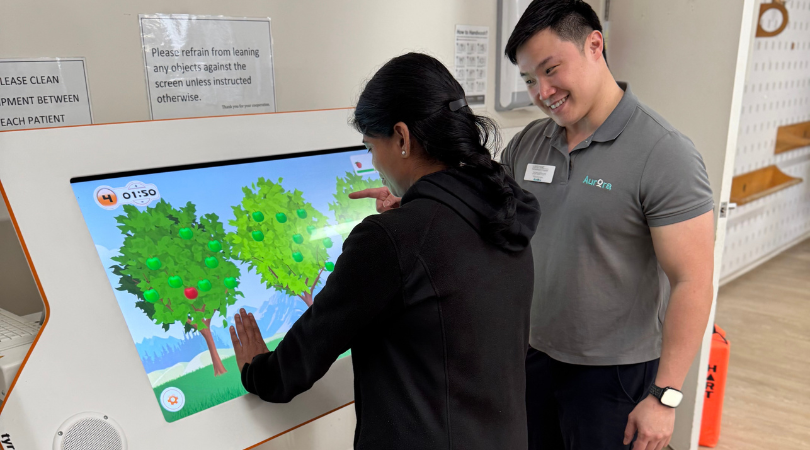
Westmead Rehabilitation Hospital combines clinical expertise with modern rehabilitation technologies to support patients recovering from stroke and neurological conditions.
Advanced rehabilitation approaches may assist with:
- Walking retraining
- Mobility practice
- Balance and coordination
- Strength and endurance
- Repetitive task training
- Functional movement practice
These technologies complement the care provided by our experienced rehabilitation specialists and therapy teams.
Inpatient Neurological Rehabilitation
Upon admission, patients undergo a comprehensive assessment to identify their individual rehabilitation needs.
Patients may receive:
- Assessment within 24 hours of admission
- Review by a Rehabilitation Physician
- Physiotherapy assessment and treatment
- Occupational therapy assessment and treatment
- Dietetic assessment and support
- Individual goal setting
- Daily therapy where clinically appropriate
- Hydrotherapy as indicated
- Family and carer support
- Discharge planning and community transition support
Our aim is to provide rehabilitation in a supportive environment that promotes recovery, independence and confidence.
Neurological Day Rehabilitation Program
Some patients may continue their rehabilitation journey through our specialised neurological day rehabilitation program.
Day rehabilitation allows patients to access ongoing therapy while living at home and maintaining their daily routines.
Programs are tailored to individual goals and may include physiotherapy, occupational therapy, education and ongoing support from our multidisciplinary team.
Why Early Rehabilitation Matters
Following a stroke or neurological event, rehabilitation often begins as soon as a patient is medically stable and able to participate in therapy.
Starting rehabilitation early may help patients:
- Rebuild strength and mobility
- Improve functional independence
- Develop strategies to manage daily activities
- Increase confidence
- Support a safe return home and participation in the community
Every individual's rehabilitation journey is different, and treatment plans are tailored accordingly.
Referring a Patient
Westmead Rehabilitation Hospital accepts referrals from:
- General Practitioners
- Neurologists
- Rehabilitation Physicians
- Neurosurgeons
- Acute Hospital Teams
- Other Medical Specialists
Patients may be suitable for admission following stroke, neurological illness, injury or surgery where rehabilitation support is clinically appropriate.
Funding and Eligibility
Eligibility and funding arrangements are confirmed prior to admission.
We accept:
- Private Health Insurance
- Department of Veterans' Affairs (DVA)
- WorkCover
- Compulsory Third Party (CTP)
Self-funded admissions may also be available.
If you have an excess or co-payment associated with your private health insurance policy, this may be payable on admission.
Frequently Asked Questions
What is neurological rehabilitation?
Neurological rehabilitation is a specialised rehabilitation program that helps people recover function, independence and confidence following conditions affecting the brain, spinal cord or nervous system.
What is stroke rehabilitation?
Stroke rehabilitation is a structured program involving therapies and medical support designed to help people recover following a stroke.
How soon after a stroke should rehabilitation begin?
Rehabilitation typically begins as soon as a patient is medically stable and able to participate in therapy.
Do I need a referral?
Yes. A referral from your GP, specialist or treating medical team is generally required for admission.
Does private health insurance cover neurological rehabilitation?
Many private health insurance policies provide cover for rehabilitation services. Our team can assist with eligibility and funding enquiries.
Do you accept DVA patients?
Yes. Eligible Department of Veterans' Affairs (DVA) patients may be accepted into the program.
Can I access rehabilitation if I don't have private health insurance?
Self-funded admission options may be available. Please contact our team to discuss your individual circumstances.
Can rehabilitation continue after I leave hospital?
Yes. Many patients transition from inpatient rehabilitation into our neurological day rehabilitation program or other community-based supports.