Author
Summary
At Westmead Rehabilitation Hospital, we now offer a robotic‑assisted upper limb therapy option that can help make rehabilitation more targeted, engaging and motivating.
Recovering arm and shoulder movement after illness, injury or surgery can be one of the most challenging parts of rehabilitation. Tasks that were once automatic — reaching for a cup, lifting an arm to get dressed, or coordinating movements — can suddenly feel difficult or frustrating.
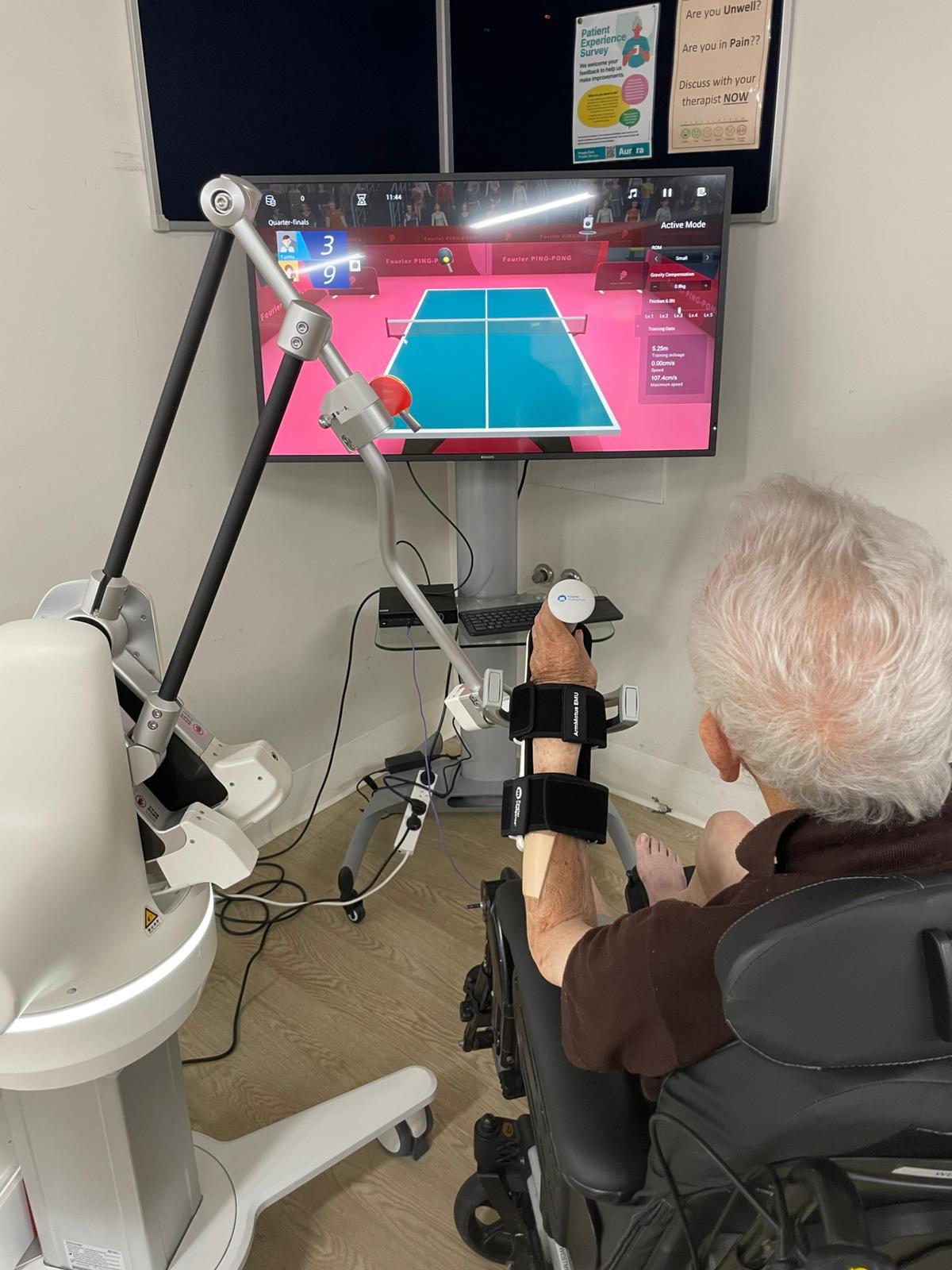
At Westmead Rehabilitation Hospital, we are committed to providing rehabilitation options that support recovery in a meaningful and motivating way. That’s why we now offer robotic‑assisted upper limb therapy using the advanced Emu Arm Motus® system — an innovative approach designed to help patients rebuild movement, strength and confidence.
What is robotic‑assisted upper limb therapy?
Robotic‑assisted therapy uses specialised technology to support and guide arm and shoulder movements during rehabilitation. The Emu Arm Motus® works alongside your treating therapists, helping them better understand how your arm is moving and where targeted support is needed.
The system tracks arm and shoulder movement in three dimensions, measuring strength, coordination, accuracy and range of motion. This detailed information allows your therapy team to tailor exercises specifically to you — adjusting therapy as your movement improves over time.
Importantly, robotic‑assisted therapy does not replace your rehabilitation team. Instead, it enhances therapy by providing precise feedback and supporting high‑quality, goal‑focused practice.
Who may benefit from this therapy?
Robotic‑assisted upper limb therapy may be suitable for people recovering from a range of neurological and orthopaedic conditions, including:
- Stroke
- Traumatic brain injury
- Spinal cord injury
- Cerebral palsy
- Brachial plexus injury
- Shoulder injury or post‑operative shoulder rehabilitation
- Difficulties with movement coordination or task sequencing
Your rehabilitation team will assess whether this therapy is appropriate for your individual needs and goals.
Why consider robotic‑assisted therapy as part of your rehab?
1. Therapy tailored to you
No two recovery journeys are the same. Robotic‑assisted therapy allows exercises to be customised to your current ability — whether you are relearning basic movement or working on more advanced strength and control. As you progress, therapy can be adjusted to continue challenging and supporting you.
2. Clear tracking of progress
Recovery often happens gradually, and small improvements can be hard to notice day‑to‑day. The Emu Arm Motus® measures subtle changes in movement, helping your therapy team track progress over time. Seeing evidence of improvement can be motivating and reassuring for many patients.
3. Engaging and motivating sessions
Therapy sessions use interactive, game‑based activities designed to encourage active participation. This can make rehabilitation more enjoyable and help patients stay engaged during practice, which is an important part of recovery.
4. Focus on real‑life function
Exercises are designed to support movements used in everyday activities, such as reaching, lifting, controlling arm movement and coordinating tasks. This targeted approach helps therapy translate into meaningful improvements in daily life.
Supported by an experienced rehabilitation team
Robotic‑assisted therapy at Westmead Rehabilitation Hospital is delivered by our experienced multidisciplinary rehabilitation team. Therapists closely monitor each session to ensure therapy is safe, appropriate and aligned with your broader rehabilitation plan.
We understand that rehabilitation is not just about physical recovery — it’s also about rebuilding confidence and independence. Our team works alongside patients and families to support goals that matter most to everyday life.
Is robotic‑assisted therapy right for you?
Robotic‑assisted therapy may not be suitable for everyone, but for many patients it can be a valuable addition to traditional rehabilitation. If you or a loved one are undergoing rehabilitation and would like to explore whether this option could be helpful, speak with your treating team or get in contact with us.
Newsroom
Follow us
Thanks!
You've successfully subscribed to our newsletter
Related news stories

Open for Care and Support This Christmas
The holiday season is a time for family, celebration, and reflection — but for many, it’s also a time when health and recovery needs continue. At Westmead Rehabilitation Hospital, we are proud to confirm that we will remain open and fully operational throughout the Christmas period, ensuring patients across Western Sydney have uninterrupted access to high‑quality rehabilitation services.
The Importance of Continuing Physical Rehabilitation During the Holiday Season
The holiday season is a time for celebration, family gatherings, and festive activities. However, for those undergoing physical rehabilitation for injuries, it can also be a period filled with challenges and temptations. It's crucial to maintain your rehabilitation routine during this time to ensure continued progress and avoid setbacks.